It’s the first month of school, and everyone seemed to have a great time meeting each other. Coincidentally, we celebrated the Mid-Autumn Festival, a celebration of appreciation for the moon, this month as well, providing a perfect opportunity to blend our excitement for the new school year with appreciation for the moon.
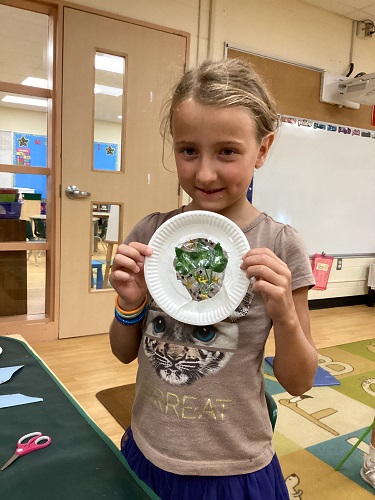 We started the celebration using paper plates to craft moon art. I made an example and showed it to the children to see how they would expand on the idea, and they displayed incredible creativity. Some scattered star sprinkles randomly over the tape, while others placed them carefully into planned designs. A few even incorporated alternative materials to enrich their moons.
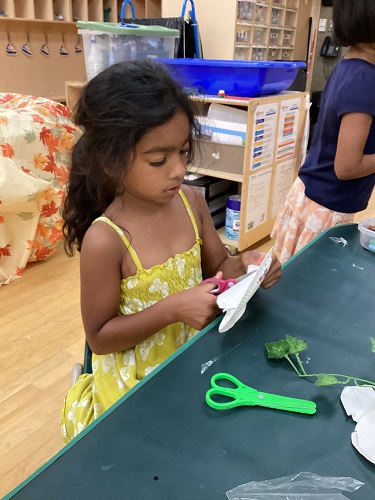
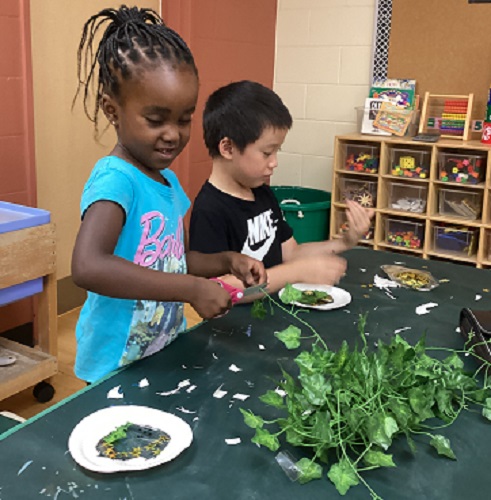
During the process, the children navigated several challenges. Most of them initially struggled to cut a circle out of the plates. A few insisted on figuring it out independently, while others asked for help. The children who succeeded on their own expressed pride, and those who received assistance felt equally happy. Both groups demonstrated valuable problem-solving skills. A third group resolved the issue simply by observing peers who were good at cutting. It was amazing to witness the diverse strategies children employed and how they influenced one another through play.
Following the circle challenge, the children eagerly lent a helping hand with taping and other materials. I overheard many lovely expressions, such as "Do you need help?" and "Let me help you with this." Whether they finished their moon plates entirely on their own or with a friend’s support, every child felt satisfied and proud of their creation.
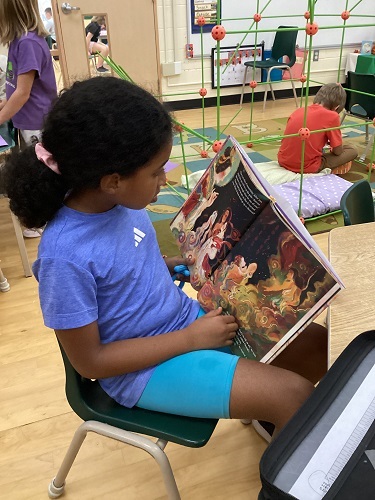 Later, the children explored the festival further by reading books and watching music videos. The video clips and stories introduced the traditional legend of the Moon Goddess, allowing them to make meaningful connections across different media. Lila and Sean had already seen the film and excitedly shared the plot with their peers. Unfortunately, they mentioned that the main character's mother passes away in the story, which made the other children shocked.
"Are you sure?" they repeatedly asked.
The two speakers confirmed, "It's true. The mom got sick and then died."
One friend reacted with sadness, "It's so sad."
Realizing that this plot point had upset their mates, Sean suggested, "Maybe I can say her mom go to heaven. It’s better." Lila agreed. From then on, the two adapted their storytelling to say that the mother "go to heaven." It was heartwarming to watch the children navigate emotional boundaries and care for one another's feelings during conversation, demonstrating an impressive capacity for empathy toward both the fictional character and their peers.
Through the activities, the children proved that learning is as much as about empathy and connection. I cannot wait to see more lovely moments of them.