As children continue to explore and use everyday materials throughout their routines, we began noticing how easily items like toilet paper and paper towels can be used in larger amounts than necessary. This sparked an interesting conversation among the children about how much we really need to use and what happens when we use too much. With potty training being part of many of our Preschool 1 friends' daily routines, this became a meaningful opportunity to explore the importance of using everyday materials wisely and avoiding unnecessary waste. We decided to extend this curiosity into a hands-on exploration to help children better understand how our everyday choices can make a difference.
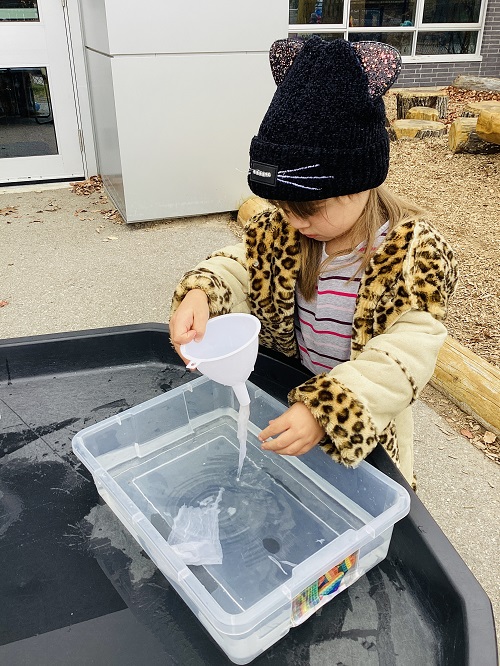
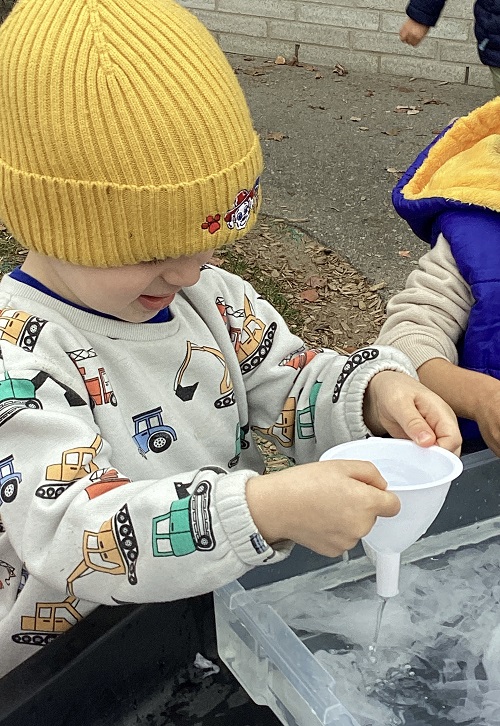
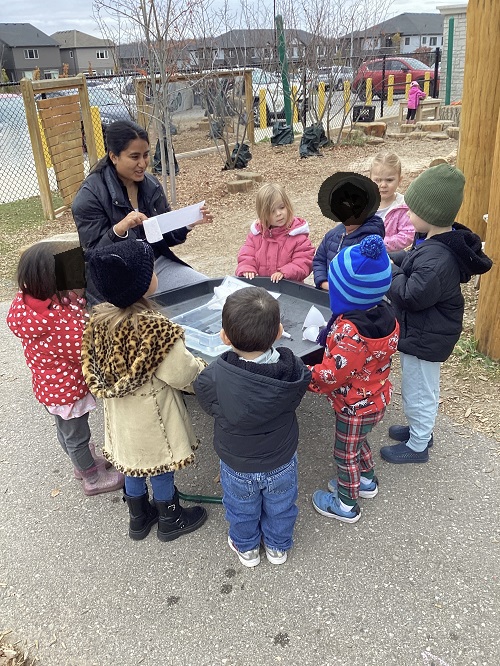
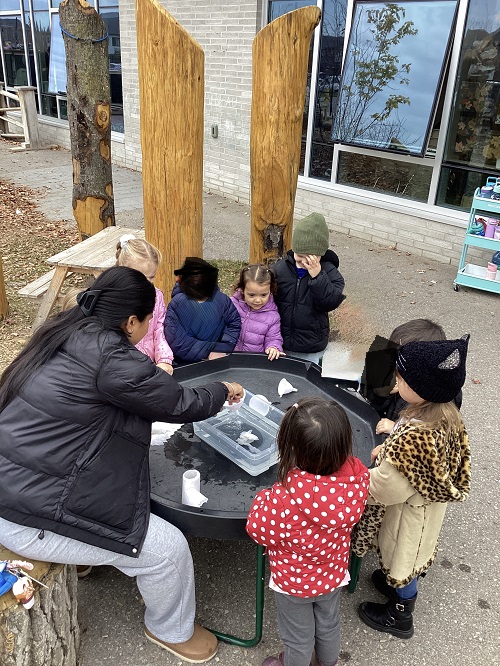
We gathered some toilet paper and paper towels, along with a container of water, funnels and other materials. The children were invited to experiment by placing the paper into the water, observing what happened, and exploring how it changed. They eagerly participated, taking turns adding paper, using funnels and watching how the paper absorbed water, broke apart and became soggy.
Throughout the activity, we encouraged children to think about what happens when we use more materials than we actually need. We added a large amount of paper towel to the funnel and observed how it became clogged. Then, we added a smaller amount of paper towel and watched how it passed through the funnel more easily. We discussed how using too much paper can contribute to clogged drains and pipes, overflowing waste bins and unnecessary waste. We also talked about how paper comes from trees, and that using more than we need means more natural resources are required to make it.
This experience encouraged children to make connections between their everyday routines and their impact on the environment. We discussed simple ways to be more mindful when using everyday materials, such as taking only what we need, being thoughtful about how much we use and avoiding unnecessary waste. Most importantly, the activity provided an opportunity for children to learn through hands-on exploration, observation and conversation. By turning an everyday experience into an engaging investigation, we supported their developing sense of responsibility, problem-solving skills and environmental awareness.
Learning through everyday experiences: Small actions can make a big difference! We are learning that we can care for ourselves, our surroundings and the environment by making thoughtful choices every day.